
Smoke From Fires
Wildfires are a natural occurrence in Montana that can have major health impacts on residents due to the harmful effects of wildfire smoke. It is important that Montanans understand why wildfire smoke is so unhealthy, the resources available to track outdoor air quality, and how they can protect their indoor air during a smoke event.
Although the harmful effects of wildfire smoke impact everyone, there are individuals who may have more serious short term health effects. Those populations include children, people with chronic conditions, older adults, pregnant women, and outdoor workers. We advise those people to follow the "unhealthy for sensitive group" outdoor activity guidelines during a wildfire smoke event.
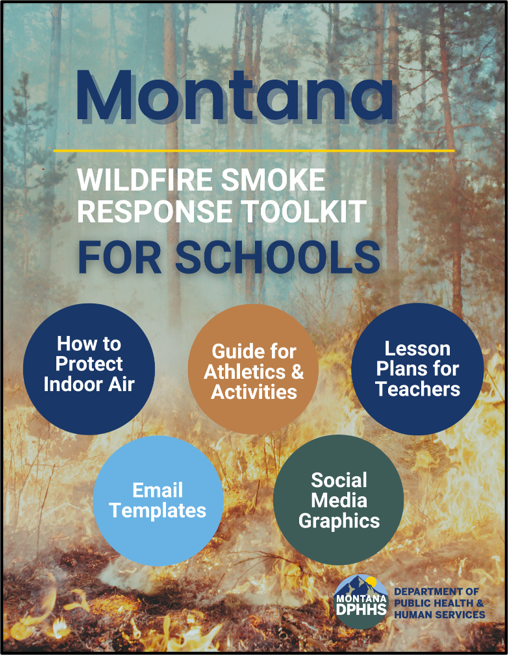
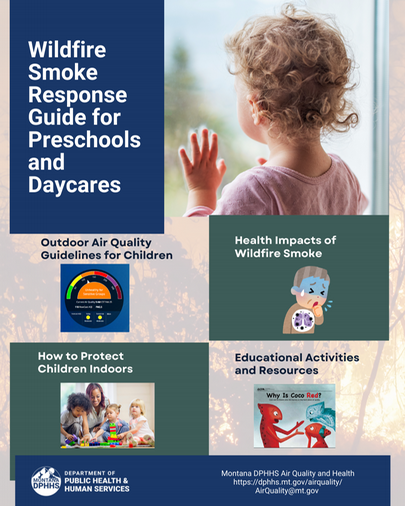
Wildfire Smoke Response & Clean Air Center Toolkits
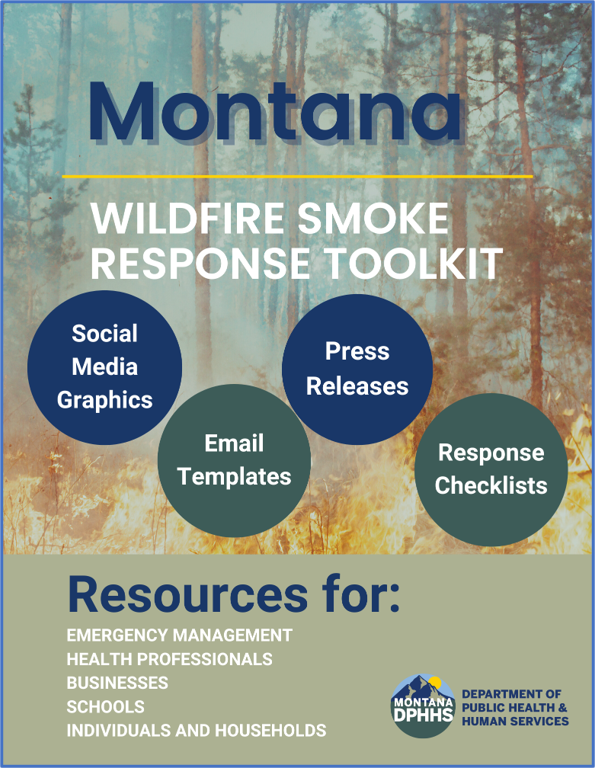
The following toolkits are designed to provide resources to emergency responders, health officials, school personnel and daycare providers resources to ensure community safety during a wildfire smoke event. All materials can be shared and rebranded with your organization. If you need other documents or a different version of materials in the toolkit, please contact us at AirQuality@mt.gov.
Clean Air Resource Centers
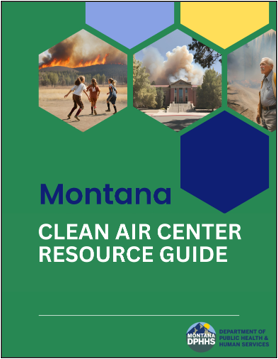
The Montana Department of Public Health and Human Services received a grant from the United States Environmental Protection Agency in 2025 to address wildfire smoke preparedness in community buildings. The main focus of this 3-year grant is to pilot a clean air center pilot program in local Montana communities that have been historically heavily impacted by seasonal wildfire smoke.
In 2026, MT DPHHS is working with local partners in Flathead County, Lincoln County, Blackfeet Reservation, and the Flathead Reservation. Clean air centers for the 2026 wildfire smoke season are as follows:
Flathead County- climatesmartglaciercountry.org/about/theory-of-change/wildfire-smoke/
- Whitefish Library
9 Spokane Ave | Whitefish, MT 59937 - Columbia Falls Community Center
205 Nucleus Ave | Columbia Falls, MT - Gateway Community Center
1203 U.S. Hwy 2 W suite 52, Kalispell, MT
- Lincoln County Library: Libby Branch
220 W. 6th Street | Libby, MT 59923 - Lincoln County Library: Eureka Branch
318 Dewey Ave | Eureka, MT 59917 - Lincoln County Library: Troy Branch
207 N. 3rd Street | Troy, MT 59935
extension.skc.edu/purple-air-monitors/
- Arlee Fitness Center
34086 Pow Wow Road | Arlee, MT 59821
- St. Ignatius Fitness Center
240 Mountain View Dr | St. Ignatius, MT 59865
- Salish Kootenai College Health & Fitness Center
58138 US Highway 93 | Pablo, MT 59855
- Black Tribal Office
640 All Chiefs Rd | Browning, MT 59417 - Blackfeet Arbor Building
In 2025, MT DPHHS worked with Missoula County and Ravalli County to establish six clean air centers. These centers are still operating as clean air resource centers.
- Ravalli County: Bitteroot Library | Darby Library | North Valley Library
- Missoula County: Seeley Lake Library | Missoula Senior Center | Lolo Library
Additional Air Quality & Wildfire Smoke Preparedness Resources
During a wildfire smoke event, residents are encouraged to check air quality regularly and follow the guidelines associated with air quality levels. There are many platforms now reporting air quality, but may of these sites are using monitors at great distances from your community and may not be using data that has been converted to EPA standards. Bookmark the sites below for the most reliable information.
Air Now Fire and Smoke Map
AirNow.gov has the most monitoring locations throughout Montana in addition to a fire and smoke map. The map also alerts you if a Smoke Forecast Outlook has been issued in your area over the next few days. The AirNow.com widget can be downloaded to your phone or computer.
Today's Air
The Montana Department of Environmental Quality provides air quality readings and activity recommendations based on data from monitoring stations placed around the state. In addition to the Today's Air website, DEQ houses a Smoke Forecast page which includes links to state and national resources related to wild fire smoke and public health.
Using Visibility to Estimate Air Quality
If a local monitor is not available to you, pay attention to visibility. Deteriorating visibility indicates worsening conditions. In general, if visibility is less than three miles, the air quality is unhealthy for sensitive groups. If visibility is less than a mile, the air is unhealthy for everyone.
Outdoor Air Quality and Activity Guidelines
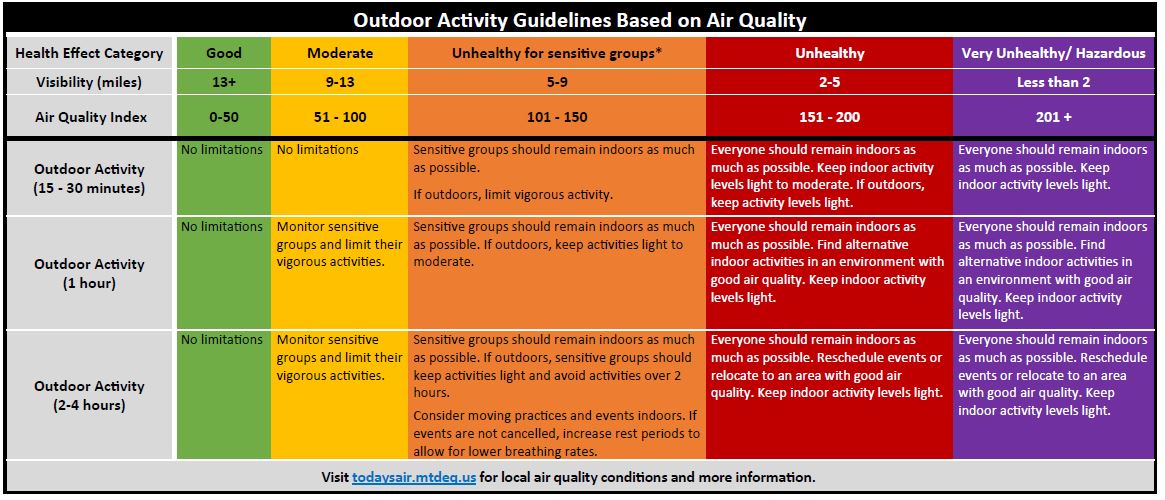
General Public: Outdoor Activity Guidelines Based on Air Quality
These guidelines are based on the amount of time spent outdoors in different levels of air quality, from good to hazardous. Activity guidelines are available in Spanish, Russian and Ukrainian in the Wildfire Smoke Response Toolkit or may be obtained by emailing AirQuality@mt.gov.
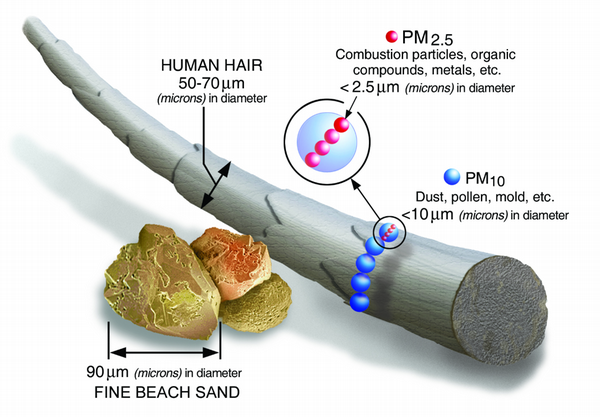
Why do we worry about the health impacts of wildfire smoke?
Wildfire smoke contains harmful particulate matter (PM). The smallest particles, those less than 2.5 microns in size (PM2.5) are especially harmful to one's health, as these particles are so small they can travel into the bloodstream when inhaled, impacting other parts of the body than just the lungs. Everyone is impacted when exposed to wildfire smoke, but sensitive populations may experience health impacts sooner when exposed to lower concentrations of smoke.
Health Effects of Wildfire Smoke
| Short-Term Risks | Long-Term Risks | Populations Most Sensitive to Wildfire Smoke |
| Chest tightness or pain | Increased risk of lung and heart issues | People with lung diseases, such as asthma and COPD |
| Shortness of breath | Decreased lung function and capacity | People with heart disease |
| Coughing or wheezing | Increased risk of respiratory disease and infection (asthma, bronchitis, COPD) | People with respiratory illness |
| Scratchy throat | Weakened immune response | People with diabetes |
| Decreased ability to focus | Increased risk of some cancers | People who are 18 years or younger or older than 65 |
| Headache | Increased risk of pre-term labor and lower birth weight babies | People who work or exercise outdoors |
| Dizziness | Increased risk of dementia | People with low income |
| Change in sleep patterns | ||
| Feelings of irritability, hopelessness, or depression |
Wildfire Smoke and Your Health
This document explains the ways that wildfire smoke impacts your health and gives simple steps to protect yourself and your family during a wildfire smoke event.
Most Vulnerable Populations to Wildfire Smoke
What to Know About Wildfire Smoke Effects on Young Children
What to Know About Wildfire Smoke and Pregnancy
Training Considerations for Athletes During a Wildfire Smoke Event
Wildfire Smoke Employee Protection
Simple steps employers and employees can take to protect their health during wildfire smoke events.
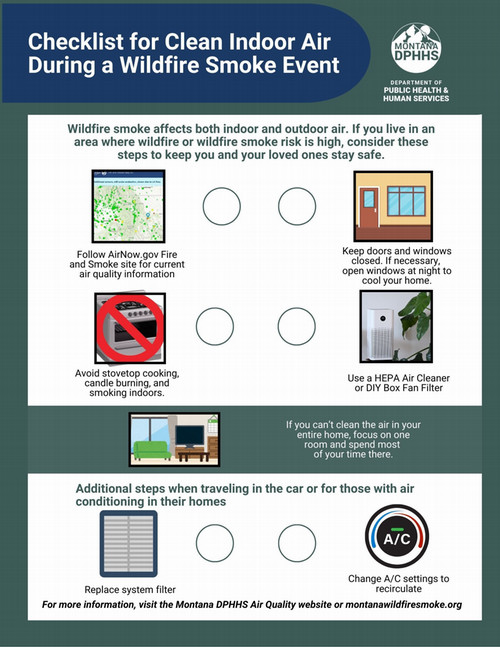
Wildfire smoke isn't just an outdoor problem. Recent studies have shown that when outdoor air quality is unhealthy, air in our homes, schools, and businesses will also become unhealthy. It is still recommended that you stay inside for two reasons: 1) activity levels drop when we are indoors, which slows down breathing rates and reduces the amount of particulate we may breathe in, and 2) there are several steps we can take to keep indoor air clean.
|
|
 |
|
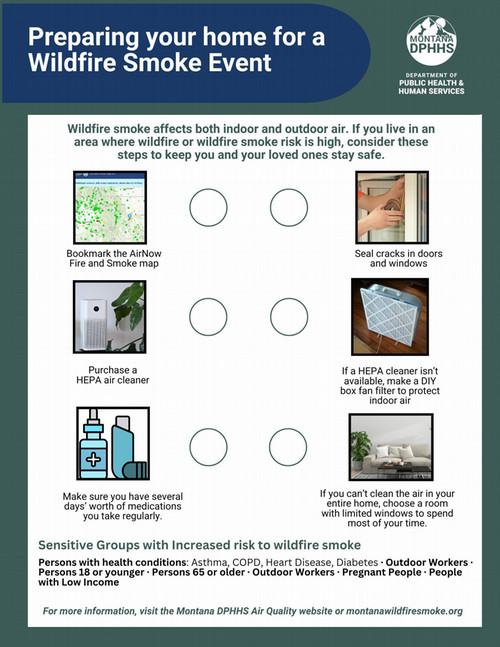
It is best to begin steps to protect your indoor air before a wildfire smoke event occurs. Those steps begin with becoming familiar with the EPA's Fire and Smoke Map. This website reports current air quality, air quality forecasts, and current information about the fires affecting air quality in your area. Then, take the following steps:
- Seal Cracks in doors and windows
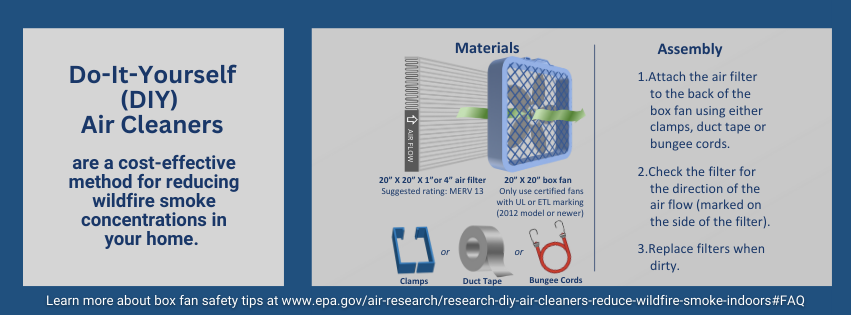
- Purchase a HEPA Air Cleaner or make a Do-It-Yourself Box Fan Filter.
- Make sure you have several days' worth of medical supplies.
- Identify a room in your home where you and your family can spend most of your time when you can't clean the air in your entire house.
During a smoke event, follow the Fire and Smoke Map recommendations for outdoor activities. Most days will have a window of time when air quality is in a healthier range, allowing you to open the windows and get outside. When you are advised to stay indoors, take the following steps:
- Keep doors and windows closed.
- Run your HEPA Air Cleaner(s) or a DIY Box Fan filter. If you only have one, leave it in the room where you spend most of your time.
- Avoid adding to poor indoor air quality by stovetop cooking, burning candles, smoking, or vacuuming (this can kick up smoke particles).
- If you have air conditioning, use a clean MERV 13 or higher filter if your system allows, and set it to recirculate air. If you don’t have AC and it’s hot, use fans to cool your home. At night, open windows to cool the house, then close them during the day and run HEPA or DIY box fan filters to clean the air.
- Create a Clean Air Room if you can't keep the air in your entire home clean.
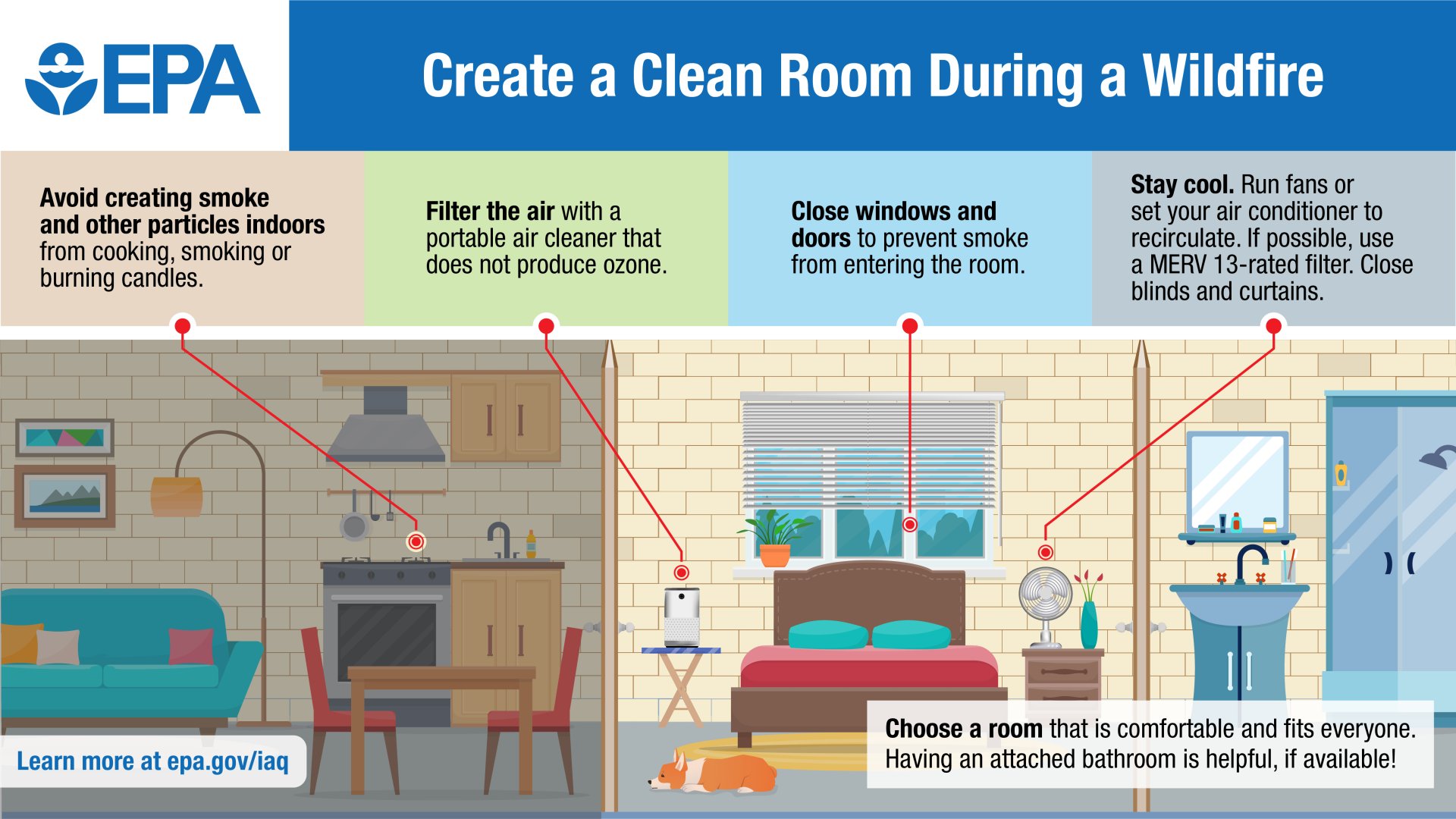
How to Choose a HEPA Air Filter: Selecting the perfect HEPA air filter can be challenging. Montanawildfiresmoke.org offers resources to help you purchase, use, and maintain your HEPA air filter. They also provide support for those needing assistance in acquiring one for their homes. If purchasing a HEPA air filter is not an option, a Do-It-Yourself box fan filter is an inexpensive alternative.
Creating a Safe Working Environment: The Environmental Protection Agency has developed suggested practices for schools and businesses during a smoke event. Please share with your employer or public schools. EPA Best Practices Guide for Improving Indoor Air in Public Spaces During a Wildfire Smoke Event
Want to share information to help your community safe during a wildfire event? Montana DPHHS has partnered with Montana State Library's Lifetime Learning Program to provide a collection of social media resources you can use. Images are available with DPHHS branding or without. Feel free to download the unbranded image and add your own!
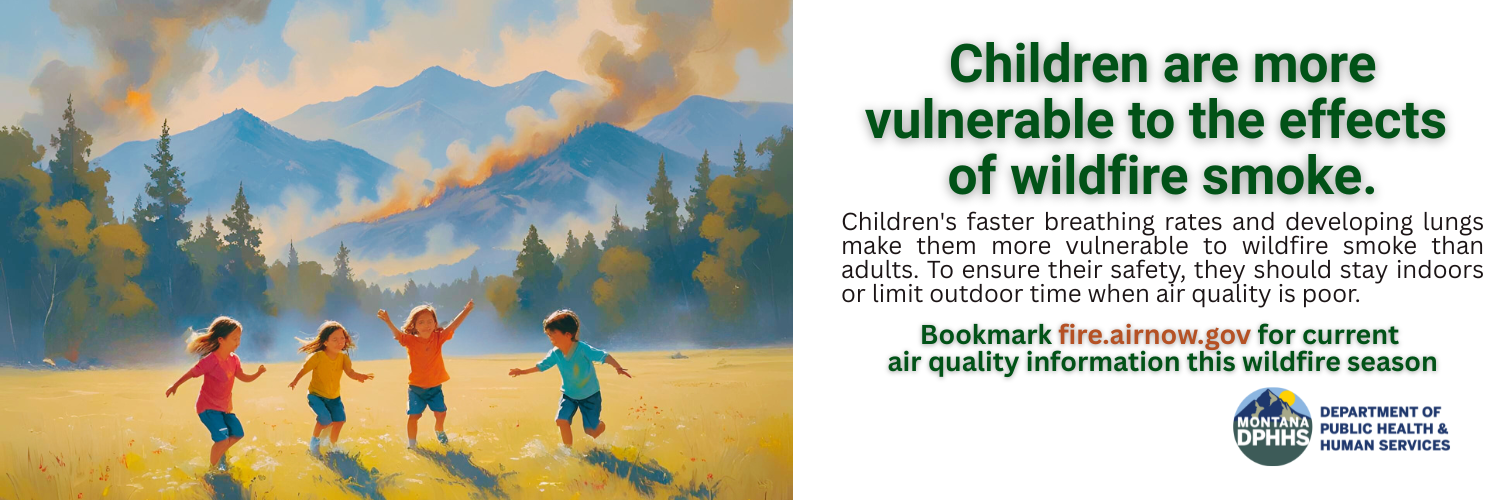
Children often face the most hazardous air quality conditions during school hours or while in childcare. The Montana Department of Public Health and Human Services (DPHHS) recognizes that schools and childcare facilities play a vital role in safeguarding our youngest residents from the harmful effects of wildfire smoke.
Children are especially vulnerable to smoke exposure for several reasons:
- Higher Air Intake: Children breathe more rapidly than adults, taking in more air—and therefore more pollutants—relative to their body size.
- Increased Outdoor Activity: Young people are typically more physically active, particularly outdoors, which raises their risk during smoke events.
- Developing Lungs: Lung development continues into early adulthood. Exposure to smoke during this critical time may lead to long-term respiratory damage.
- Undiagnosed Conditions: Many children may have underlying respiratory issues, like asthma, that can be aggravated by smoke exposure.
While most educators are familiar with the Outdoor Activity Guidelines, it’s also crucial to recognize how wildfire smoke can compromise indoor air quality. To ensure a safe learning environment during wildfire season, Montana DPHHS recommends the following practices:
- Seal Out Smoke: Keep all windows and doors shut to minimize indoor smoke infiltration.
- Use HEPA Air Cleaners: Operate HEPA air purifiers in classrooms and common areas continuously during smoke events to filter out harmful particles.
- Monitor and Adjust Activities:
- Move recess, PE, and outdoor activities indoors if the AQI exceeds 150.
- For children with asthma or chronic conditions, bring activities indoors if AQI is over 100.
- Check real-time air quality at fire.airnow.gov.
- Avoid Indoor Pollutants: Refrain from using candles, incense, or strong cleaning products that contribute to indoor pollution.
- Stay Hydrated: Encourage students to drink plenty of water to help combat the dehydrating effects of smoke exposure.
Resources for Administrators
- Recommended Wildfire Smoke Response Protocol
- Email to Families Template
- Email to School Staff Template
Resources for School Nurses and Counselors
- Children Most Vulnerable to Wildfire Smoke Fire Smoke
- Email Template to Teachers from School Nurses re: Wildfire Smoke
- Suggested 504 Accommodations for Students With Chronic Conditions
Resources for Coaches and Athletes
- Training Considerations for Athletes During a Wildfire Smoke Event
- Wildfire Smoke Practice Protocol Template
Educational Resources for Teachers
Montana Wildfire Partners
Ready and Safe Montana
Ready and Safe Montana serves as a landing page for current emergency events. This site can help direct you to public health news and alerts, air quality monitoring and reporting, weather forecasting, and travel and road conditions. Ready and Safe also houses information for the general public about individual preparedness and opportunities to support local emergency response efforts.
MontanaWildfireSmoke.org
MontanaWildfireSmoke.org grew out of efforts by Climate Smart Missoula to help Missoula area communities during times of wildfire smoke and other changing summer conditions. The site provides evidence based information on the health effects of wildfire smoke and includes instructions on how to read air quality levels using the Today's Air website and the Outdoor Activity Recommendations for Schools and Childcare Centers. Climate Smart has also produced a number of short videos about assessing air quality and protecting yourself from wildfire smoke.
National Resources
American Lung Association
The American Lung Association offers general recommendations for the public and specific tips for individuals with chronic respiratory diseases.
American Red Cross- Find Open Shelters
The American Red Cross opens shelters in times of emergencies. If you are forced to evacuate from your home and need a place to go, the Red Cross may be able to provide temporary shelter.
Centers for Disease Control and Prevention (CDC)
Department of Natural Resources and Conservation (DNRC): Fire Map
Interactive web map for DNRC Wildland Fires
Environmental Protection Agency
- Particulate Matter Pollution
- Smoke-Ready Toolbox for Wildfires
- Wildfires and Indoor Air Quality
- Wildfire Smoke in Community Buildings Grant Program
Ready.gov/wildfires
This page explains what actions to take if you receive a fire weather watch alert from the National Weather Service for your local area and what to do before, during, and after a wildfire.